 Bee203
Why I built Bee203
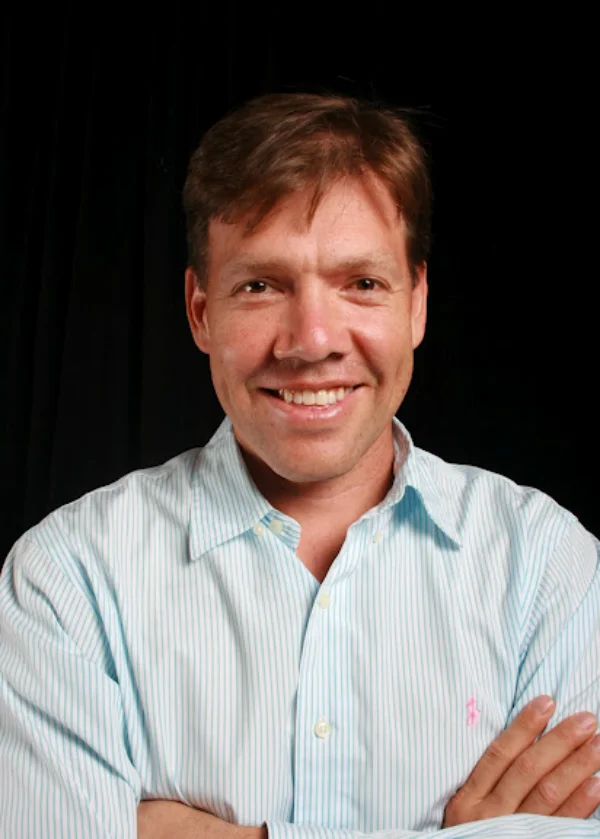
Andy Cooper, in his own words
At one point my bank account showed negative $134. Every credit card was over the limit, and the late fees kept coming. My credit score had dropped. The water and electric companies were sending disconnect notices.
I start there because that's where I was. There are a lot of hard stories in the world, and a lot of success stories. Next to what some people live through, my hard times were a walk in the park. Everyone has to live their own story, and comparing yours to someone else's doesn't help. I share mine hoping it helps somebody who is in the middle of theirs.
Same person, different name
I was born in Colombia, and as a teenager I represented Colombia at a Water Polo World Cup in São Paulo, Brazil. Good times. Today I'm a US citizen.
Two years ago I changed my name. Before that, I sent more than 100 job applications and didn't get a single meaningful response. Zero interviews. Zero offers. After I changed it, I sent 10 emails, got 4 interviews and 2 job offers. My real estate sales went up.
Same person, same experience, same work. Only the name was different.
I'm proud of where I come from. I just wanted my work to be judged first.
A single dad, and a lot of help
I was a single dad for more than ten years, and for a while my family was on Medicaid. Life changes on you when you least expect it. People helped me, and here's what I learned: the people who want to help you the most are often the ones who have the least. I still can't fully explain that, but it's been my experience every time. I worked my way off Medicaid and kept running my own business. Doing both, the kids and the business, was the hardest thing I've ever done.
The kids are grown now. My daughter was not the best player on her soccer team. A lot of games, she sat on the bench. She still got a soccer scholarship, and what got it for her was good marketing. She graduated in business from Ithaca College and has a really good job.
My son came home and told me he scored in the top 3% in the country on the SAT. I thought he meant the bottom 3%. When I finally understood, I cried that day. Who was I standing in front of? Every school he applied to accepted him, and he went to Harvey Mudd for engineering.
People tell me I got lucky. Funny how people confuse luck with discipline, hard work and dedication. It only took us 15 years of daily training to get there.
Her soccer scholarship taught me a business lesson too. A product doesn't have to be perfect. People have to know about it, and somebody has to sell it. Those people were a team of two: my daughter and me.
What running small businesses taught me
I've had businesses that did well, some that didn't, and one that went broke and gave me the footing I stand on today.
When I ran an IT services company, most service calls lived on paper, in Word, in a simple database or in Excel. Nothing fancy. A client would call and ask, "What have you done for me that's worth paying you every month?" I couldn't answer. So I paid about $1,000 a month, for five people, for software that could pull a report and show them. Those reports kept my clients, and my business, going.
As my business grew, we started selling electronic medical systems to doctors' offices. On paper it looked great: $12,000 in "profit" per installation, sell 20 of those and we're fine. Then our numbers showed we were spending $16,000 in support labor on each one, because the system was buggy and hard to train people on. We were paying to keep that client. We dropped the product. Without the numbers, we would have kept selling it and gone broke doing it. That's when I really learned what cost of goods means. Before that, I'm sure there were plenty of jobs where I paid the client to work for them and never knew.
In my career as a real estate broker, clients taught me that you have to answer fast. If you forget who called you and what you promised to put together, someone else gets the deal. It's not an easy industry when everybody you know, and all their friends, has a real estate license.
As I keep building technology ventures, I still meet companies that have been in business for years with no contact system and no way to track a project. I wonder how much money they lose without ever knowing it.
One of my clients sells custom area rugs. In her business, every designer asks for a catalog, a PDF. Even with professional photos, she pays somebody to lay it out, and you can't keep paying for that every month.
Why Bee203 exists
Small businesses are what this economy runs on. The US Small Business Administration counts 36.2 million of them: 99.9% of all businesses in the country, employing 62.3 million people, almost half of everyone who works in the private sector. The landscaper, the hair salon, the food truck, the cleaning company, the contractor with a 20-person crew, the design studio, the bakery, the tutor, the immigrant opening a first shop. Without them there is no growth and no new ideas.
Most people starting a business don't know how to price, don't know taxes, and have never heard the words CRM or cost of goods. I didn't either. When they finally go looking for software, it's expensive. Per user, per company, per feature. It adds up fast.
I know a landscaper who keeps his personal books and his landscaping books. His wife runs a tutoring business. His daughter has one too. That's three subscriptions, somewhere between $150 and $300 a month. That's advertising money. That's how you get new clients, and without new clients you don't grow.
So I built one system that does what I always needed. The books, with profit and loss for taxes. Contacts and follow-ups, so you never forget the call that wins the deal. Projects, so you can see where your people and your budget are. Appointments. Card payments. A store. And catalogs. Upload your photos, pick a template in your brand colors, and you have a professional catalog in about 10 minutes, as many times as you want.
After a job, you can send the client a before-and-after thank-you. My rug client's customers are so proud of theirs that they share them with friends and family. That's free marketing, and it keeps a customer happy.
It works in English and Spanish. I know what it's like to do business in two languages, and a company in Colombia selling to the United States needs its proposals in both.
If you grow, we grow. If you have a slow month, your software bill won't be what sinks you.
You can start free. Everybody deserves a fair shot, no matter where they come from.
The potatoes story
I was driving in Colombia with three friends when we saw a farmer on the side of the road selling bags of potatoes. I turned the car around. He asked for 100,000 pesos, and one of my friends said, "That's insane, you're ripping us off."
I remember turning back in disbelief and telling my friend, "Think again about what you're saying." This farmer got up before dawn. He probably doesn't own a car, so he carried those bags onto a bus to get here. His other option is a supermarket that pays whatever the supermarket wants to pay. If he doesn't sell today, he loses the whole load and has to go back and grow it again. He isn't begging. He's asking you to see the value in what you're buying.
My friend went quiet. I paid him, took all the potatoes, and gave them to five families. Nobody asked me whether I could have gotten a better price.
Every small business owner has been that farmer at some point. You do the work, you carry the risk, and someone bigger sets the rules. That's who I built Bee203 for. It gives you the edge: your clients, jobs, books and payments in one place, so you can grow without losing control. Growth without organization is a recipe for disaster.
Where I am now
For two years I've built Bee203 full time. I lived on my savings, and the savings are gone. If I had taken a regular job, I'd have earned somewhere between $80,000 and $160,000 in that time. I chose this instead. I work 70 hours a week, and some nights I wake up and go back to programming.
Family members ask how much I'm making, and the answer is nothing yet. To them it's a dream. To me it's a goal with dates and specific actions. This is the loneliest road I've ever taken. The hard days are the ones when I doubt myself.
What I care about is making a real difference, and making a profit without squeezing the people who use Bee203. I've watched companies start with good values and lose them once Wall Street gets involved. I admire Mark Cuban for building a pharmacy around fair, open prices for medicine. That's the kind of company I am building.
Any partner I take on has to share a version of this philosophy. Social responsibility has to be part of Bee203, or I'm not interested. A partnership is like a marriage. The right one takes a business places it could never go alone. The wrong one sinks it.
When the right partner joins me, this is what we'll build together: a Hive Fund that puts 1% of profits into training, mentoring and a helping hand for new entrepreneurs and small businesses, whoever they are. And the people who build Bee203 will own part of it.
Whatever you're building, big or small, reach out a hand to someone else when you can. It makes a huge difference to that person, to the people around them, and to everyone else down the line. I was on the receiving end of that help once. I hope the people Bee203 helps pay it forward too.
Do I believe in it? 1,000%.
Andy Cooper, founder of Bee203
When I'm not building Bee203, I write music. You can hear it at andybcooper.com. If one of the songs speaks to you, give me a shout.